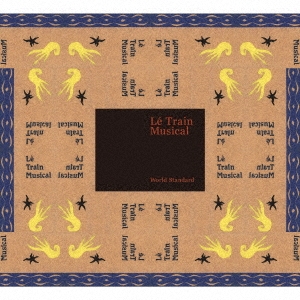
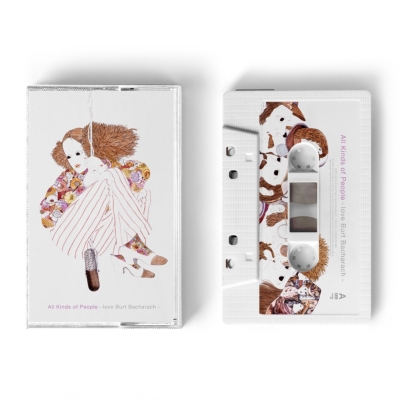
Three Dances is a piece written by John Cage, originally for two prepared pianos, but arranged by Kazue Sawai for four bass kotos'. Originally released in 1992, this is a remastered version with an unreleased track 'Sanka [Song of Praise]' written by Tadao Sawai. Includes English liner notes.
1. Three Dances 1 2.Three Dances 2 3. Three Dances 3 4. Malvina For Koto (13 Stringed) 5. Concerto For Koto And Orchestra 6. Sanka [Song of Praise]
This was the brilliant, influential koto player Kazue Sawai's first solo album. The material on this album won an award as the best concert of 1979 and then was recorded in a studio in 1980. First ever CD reissue comes with two extra tracks; Toward The Sea For Alto Flute And 17-stringed Koto by Toru Takemitsu and Nocturne For 17-stringed Koto by Toshio Hosokawa.
1. Drifting Island For Koto (17-stringed) And Percussion Op.38 2. Two Fantasies For 20-stringed Koto & 17-stringed Koto 1. 3. Two Fantasies For 20-stringed Koto & 17-stringed Koto 2. 4. Isurugi For Solo 17-stringed Koto 5. Homura For Solo 17-stringed Koto And Koto Ensemble 6. Nocturne For 17-stringed Koto 7. Toward The Sea For Alto Flute And 17-stringed Koto 1.the Night 8. Toward The Sea For Alto Flute And 17-stringed Koto 2.moby Dick 9. Toward The Sea For Alto Flute And 17-stringed Koto 3.Cape Cod Price: £23.99
Reissue of an album thought by some to be a bit of a masterpiece from 1987. The experimental koto player was joined by Peter Hamill, the British prog rocker of Van Der Graaf Generator, Japanese singer Hiromi Ota and was produced by Eastern stringed insstrument specialist, and a bit of prog rocker himself, Ayuo Takahashi.
1. Eno Naka no Sugata Yattsu no Koro ni 2. Eno Naka no Sugata Kekkon no Yoru ni 3. Eno Naka no Sugata Yonju no Toki ni 4. Futari wa Takeno Isu ni Suwari Sora no Tsuki to Sono Mizuumi no Hansha o Nagameta 5. Chiriyuku Hana no Uta 6. A Letter from Strangers Childhood 7. Midare 8. Me to Me 9. Hashi o Watatte
55 minute performance recorded in Norway in 2008 of Michiyo Yagi (koto), Peter Brotzmann (alto, tenor saxophones,tarogato) and Paal Nilssen-Love (drums). Improvised with moods ranging from plaintive to wild.
Price: £20.99
Solo album from one of the most successful koto players in the current scene. Atsuko Kida plays with Bamboo Orchestra, has played with Koto-za and on this album plays modern masterpieces on koto, seventeen stringed koto and sangen (shamisen)
1. Koto Shiju-so-kyoku 2. Ochiba no Oodori 3. Genso Gokei 4. Seoto 5. Koto no tameno Kumi-kyoku
New album by popular koto player / composer. Plays own songs and songs written by his uncle in duo, trio, quartet and quintet, a list of which reads like a who's who of the Japanese contemporary traditional music scene. These musicians are Tomoko Nomura, Miki Maruta, Azumi Yamano, Tamafune Tanii, Yoko Nishi (koto) Kuniko Obina (koto, sangen) Asaka Ikegami, Etsuko Takezawa (17 stringed koto) Yuko Hirano (shamisen) Shozan Tanabe, Ikuya Iwata, Akihisa Kominato, Ryozan Sakata (shakuhachi).
1. Yuki Shimaki 2. Narayama Skelzzo 3. Tsukishirube II 4. Souju 5. Plaiades 6. Sou 7. Niju-sou Shigure no Yoru
Price: £24.99
Kan are Koto player Shin Ichikawa and shakuhachi player and vocalist Akihisa Kominato. Both come from families steeped in traditional and folk music, yet together these young musicians have tried to create something quite new. Jazzy club style music, championed by Mondo Grosso and Jazztronik among others, this mini-album contains a version of Stevie Wonder's Superstition.
1. Eternal Flow 2. Come in...Planet Earth 3. Interlude / Neo Tokyo Lounge 4. Superstition 5. Wideopen / Tang Trip feat. Twigy 6. Eastern Wind
Keiko Mutsumori is a koto player from Kurashiki, Okayama prefecture. She started to learn from the age of six, and modern koto styles from Tadao and Kazue Sawai. She started playing professionally as a solo artist in 1986, released her first album in 2001 and has performed in the USA, France and China as well as many recitals in Japan. This is an album aimed at the new age as well as the traditional market, with improvisational passages and well known Japanese and Western tunes.
1. Yurukaze 2. Bara no Waltz 3. Love One 4. Crystal Blue 5. Anata no Tameni 6. Para! Pa! Para! Pa! 7. Baby Pink no Uta 8. Spring 9. Kagayaki 10. Haru no Kaori 11. Mata Ashita 12. Ave Maria Price: £18.99
Nanae Yoshimura is a specialist on the twenty stringed koto. She has performed around the world including London, Paris, Vienna and New York and played with the Leipzig Gewandhaus Orchestra and the St. Louis Symphony Orchestra. On this album she is accompanied by flute, cello and Japanese flutes.
TsuguKaji-Koto are Ai Kajigano (17 stringed koto and vocals) and Tsugumi Yamamoto (17 and 25 stringed koto/vocals). It's unusual for koto players to sing, but they seem to pull it off quite well.
1. Pattern 2. Yukionna 3. Ehon no Naka kara 4.Istumo Mieru Kawa 5. Hoshi ni natta Otoko 6. Mudai - Istuki no Komoriuta
Price: £22.99
Tonfu is young koto player Rin Nakashima. This is her first album, on which her koto and bass 17 stringed koto is combined with the shakuhachi of Hideki Ishigaki, percussion plus guitar and keyboards on a couple of tracks. Nakashima writes all her own material and shows considerable talent with innovative compositions and arrangements. Both relaxing and gentle tunes and more upbeat experimental ones.
1. Cherry Blossom Rendezvous 2. Living Life 3. Wind Flow 4. Rain Splash 5. Walking 6. Moon Shadow 7. Healing Tree
Nagashi uta performed on the koto with orchestral accompaniment. 2 CDs, 30 tracks. Artists include Kimiko Yamauchi & Seiryu-kai, Saburo Maki & Koto Emsenble and Columbia Orchestra. Price: £32.99
Kokohana are Nanae and Migiwa who both play 25 stringed koto. The duo are aimed more at the new age market than anything else. They performed in France in 2008 and have been gaining a following outside Japan. This album includes a collaboration with Okinawan and ex-Nenes singer Misako Koja. 13 tracks.
Duo En are Americans Elizabeth (koto) and John (shakuhachi) Falconer. On this wonderful album, the duo, together with some collaborators, play the compositions of Tadao Sawai (1937-1997), probably the greatest composer of contemporary koto music and a fine koto player himself. Elizabeth studied under Tadao Sawai and his wife Kazue, in Japan for many years. The clear passion and love she has for the music shines through in these wonderful versions of some of Sawai's most famous compositions. These include a quite magical performance of Tori no Yo-Ni (Like a Bird) performed solo by Elizabeth, while John plays shakuhachi on two tracks and the experimental vision of Sawai is acknowledged with a koto and violin duo on Naki Suna Yo. One thing is for sure, Tadao Sawai would be proud of his former student. 1. Kaze no Uta (Song of the Wind) 2. Tori no Yo-ni (Like a Bird) 3. Naki Suna Yo (Singing Sand) 4. Haru no Gotoku (Spell of Spring) 5. Hotaru (Fireflies).
Price: £14.99
On the second volume, collaborators of Elizabeth Falconer (koto) and John Falconer (shakuhachi) include Jessika Kenney (vocals) Marcia Takamaru (shamisen) and Brian Falconer (koto). These two volumes of the works of Tadao Sawai followed a year long series of concerts of Sawai's music in Seattle performed by Duo-En. 1. Yurero Aki (Stirring Autumn) 2. Sanka (Song of Praise) 3. Ginga (Milky Way) 4. Manjushaka (Equinox Flowers) 5. Hana (Flourish)
Dragonfly are Aiko Shimada (vocals and guitar) Elizabeth Falconer (koto) and Mako (sanshin, vocals and ukulele). On this album they play Okinawa, Japanese and Hawaiian traditional tunes. Interesting mix of instruments beautifully performed and superbly sung by Aiko and Mako. 13 tracks. Tinsagu nu Hana (Balsam Flowers), Pupu Hinuhinu (Shiny Shell Lullaby), Mahalo, Warabi Gami (Blessings from Heaven), Tsukinu Kaisha (Ocean Moon), Tanabata no Uta (Song of the Star Festival), Ku'u Pua I Paoakalani (My Flowers at Paoakalani), Migumi (One), When Pueo Flies, Akata Sundunchi (My Heart, My Home), Kojo no Tsuki (Moonlit Castle Reflections), Hatachi Miyarabi (Youthful Beauty), Dreaming-Yume. Price: £14.99
If anyone was destined to become a koto player, that person has to be Hikaru Sawai. The son of the late Tadao Sawai and the world renowned koto player Kazue Sawai, he learnt from a young age, studied at all the right places (Toho Academy of Fine Arts for Children) but then decided he wanted to be a rock guitarist. However it wasn't long before he was lured back into the koto world, performing with his father, and eventually becoming head of the Sawai Koto Institute upon his father's death in 1997. Like his father, he is becoming known as a composer as well as a performer, and on his second album he showcases six compositions including Rock Garden Prologue, Illusion, Aka no Irodori and Rock Garden Epilogue. Sawai plays the 17 stringed koto and standard koto and sangen (shamisen).
Hikaru Sawai is the present head of the Sawai koto institute and the son of Tadao and Kazue Sawai. Hikaru is one of the leading composers of modern koto. He grew up listening as much to rock music as koto, which gives his compositions a contemporary feel, and has been playing in rock bands for several years. Hikaru plays a 13 stringed and 17 stringed koto, plus sangen (3 stringed instrument) and performs with various other musicians including fellow koto player Chieko Fukunaga, a shakuhachi player and the Tadao Sawai ensemble. Price: £23.99
Michiyo Yagi is one of Japan's most innovative koto players. Her koto style is influenced by American composers she met while living there such as John Cage and John Zorn. She was a member of the pioneering Koto Vortex, Paulownia Crush and Kokoo. This is a solo album played on the seventeen stringed koto. Eight excellent tracks.
Recorded live in Tokyo in 2004. Avant-garde koto player Michiyo Yagi with Norwagian musicians, Ingebrigt Haker Flaten (contrabass) and Paal Nilssen-Love (drums). These three met for the first time on the day of the concert. They simply had a sound check and then performed together. As such it's very improvised and has a tension that sparks some magical moments. Price: £23.99
One of Japan's most brilliant koto players Michiyo Yagi (she also plays with Koto Vortex), was a student of Tadao Sawai, is influenced by John Cage and has worked with John Zorn. On this album she is joined by six of her own students, called Paulownia Crush. The group is renowned for playing in non-Japanese scales, defying musical boundaries, and pushing the borders of koto. Comes with English liner notes.
Latest album by Koto (harp) quartet, playing progressive new compositions. Price: £23.99
Miki Maruta is one quarter of the superb koto quartet, Koto Vortex, and a brilliant koto player in her own right. In similar vain to Koto Vortex, includes version of her late teacher and master, Tadao Sawaii's 'Like A Bird', other Sawaii and contemporary compositions. Exquistely played, with just the right dose of daring and inventiveness. Includes shakuhachi (bamboo flute) on one track by Dozan Fujiwara and one track with Miki singing in the traditional style.
Just sixteen years old, Morikawa is a koto prodigy. The big hope for being able to do for the koto, what the Yoshida Brothers did for the shamisen; that is turn an ancient forgotten instrument into something cool and new for the young. Compositions are by deceased contemporary koto master Tadao Sawaii, and his son, Hikaru. Certainly Morikawa is talented, combining finesse and delicacy with speed and power. The only quibble is she starts each tune with a short pretentious poetry reading, which becomes increasingly annoying. Other than this, a remarkably confident first album. Price: £23.99
There seems to be a surfeit of young traditional musicians at the moment in Japan. Playing Japanese music is trendy again, after years of being way behind western music in the cool stakes. Somewhat unusually Hideaki Matsumoto is a male koto player in what is mostly a female dominated instrument. He grew up playing piano, not turning to koto until he was at university and on this album Matsumoto plays his own original compositions with a piano accompaniment. He also does a solo rendition of the famous tune 'Kojo No Tsuki'. Eight tracks that do more or less what it says on the tin. Dramatic but with lighter moments.
Two young female koto players perform various tunes under the guise of healing music. They play 25 stringed koto on nine tracks, mostly original tunes with titles such as 'gentle rain'. Price: £22.99
Mostly minamilist and contemporary pieces played on solo koto, but includes version of the well known 'Sakura' and new compositions together with a chorus group. An intense and rewarding listen.
Contemporary Koto player, playing kind of minimalist music, together with occasional shakuhachi and keyboards. Rather interesting. Price: £23.99
Famous Japanese songs played healing new age style by the group Collage featuring koto player Mie Kato and producer Hiroshi Igarashi, on synthesizer, programming, guitar and other instruments. Tracks include Aoge ba Toutoshi, Akai Kutsu, Aka-tombo, Amefuri, Amefuri Otsuki san, Amefuri Kumano ko.
Koto plus synthesizer and other western instruments on versions of famous Japanese tunes including Inu no Omawari san, Ue o Muite Arukou, Umi, Ureshii Hinamatsuri, Edo Komoriuta, Ookina Kuri no Ki no Shitade, Oshogatsu.
Price: £16.99
Pleasant enough new age healing versions of Japanese songs on koto and luscious keyboard arrangements. Tracks include Ohanashi Yubi san, Oborozukiyo, Omocha no Cha Cha Cha, Kahsan no Uta, Kata, Tataki, Kamome no Suihei san, Karatachi no Hana.
Koto plays Japanese well known songs with western accompaniment: Kisha Poppo, Kyo no Hi wa Saoyounara, Koinobori, Kojo no Tsuki, Kono Michi, Konnichiwa Aka chan
The famous tracks on this one include Sakura Sakura, Sacchan, Shiawase nara Te o Tatakou, Shiki no Uta, Jidai, Shabom-dama, Zui Zui Zukkorobashi.
Sei-kurabe, Zosan, Takibi, Chiisai Aki Mitsuketa, Tulip, Tsuki no Sabaku, Tsubas o Kudasai and other tunes played on koto and western instrumentation by the group Collage.
Collage play Te ho Hira o Taiyo ni, Tohryan se, Doremi no Uta, Donguri Koro Koro, Tombo no Megane, Nada Sou Sou, Natsuno Omoide and other well known Japanese tunes.
Tracks include Nanatsu no Ko, Hana, Hanyu no Yado, Hamachidori, Hamabe no Uta, Haru ga Kita, Haru no Ogawa
This selection of tracks includes Fuyugeshiki, Fuyu no Seiza, Furusato, Hotoru no Hikari, Miagete goran Yoru no Hoshi o, Mikan no saku Oka, Musunde Hiraite
Tracks on the final volume of Japanese songs played on koto with new age style accompaniment include Medaka no Gakko, Momiji, Yashi no Mi, Yuhi, Yuyake Koyake, Yuki, Ryoshu, Ringo no Uta Price: £16.99